

A bra can fit comfortably and still be difficult to fasten. If reaching behind your back or handling small hooks is a challenge, the closure deserves as much attention as the cups, straps, and fabric.
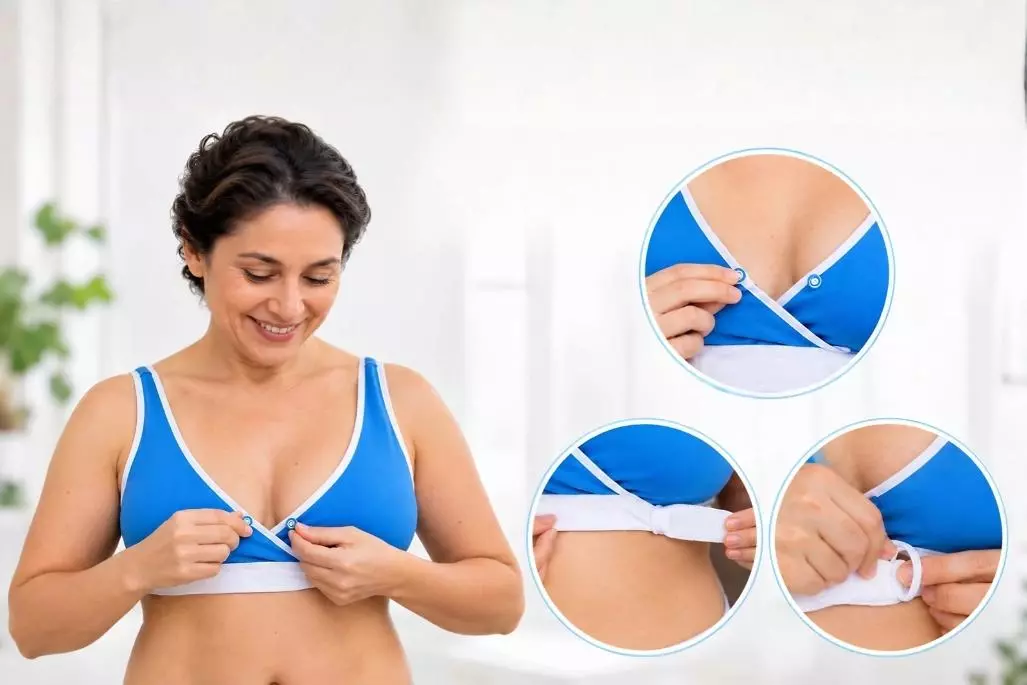
Velcro® front closure bras bring the fastening within sight and reach. Rather than lining up tiny hooks, you secure the fastening surfaces at the front. Some designs also let you tighten or loosen the band to adjust the fit beneath your bust.
But front placement alone does not tell you how easy a bra will be to use. The tab needs to be manageable to grasp, the closure comfortable to open, and the band secure once fastened.
This guide explains how Velcro® front closure bras work and what to look for when choosing one for your dressing needs and everyday comfort.
.webp)
A Velcro front closure bra fastens at the front with a Velcro®-style closure instead of traditional hooks in the back.
The main benefit is simple: the closure is in front of you. That means you do not have to reach behind your back to fasten small hooks. You can position the bra, bring the closure together at the front, and secure it where your hands and eyes have more control.
If you are someone who struggles with back hooks, this can make dressing easier and more manageable.
A Velcro® front closure bra may be helpful for women who have difficulty with the movements traditional bras require.
That can include women with:
arthritis in the hands or fingers
reduced grip strength
shoulder stiffness
limited range of motion
difficulty reaching behind the back
one arm with limited movement
sensitivity to tight or complicated clothing
fatigue that makes dressing feel harder
The point is not just convenience. For some women, the right closure can help support more independent dressing.

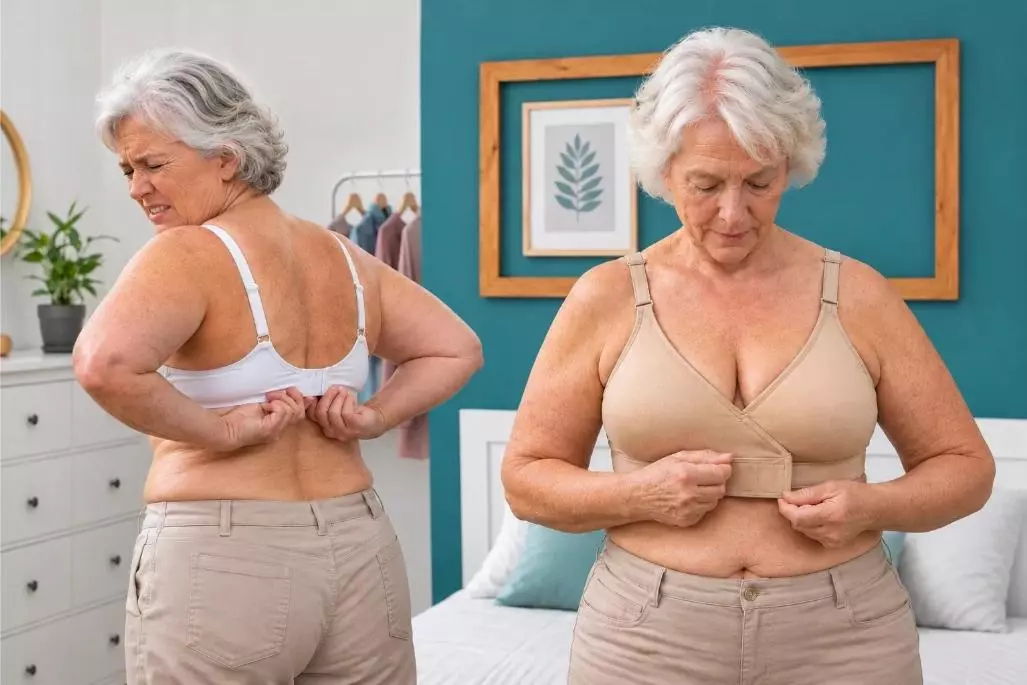
Traditional bra hooks are small. They require finger precision, grip, and coordination. You often have to fasten them behind your back, where you cannot see what you are doing.
That can be especially difficult if your fingers are stiff, sore, weak, or less flexible than they used to be.
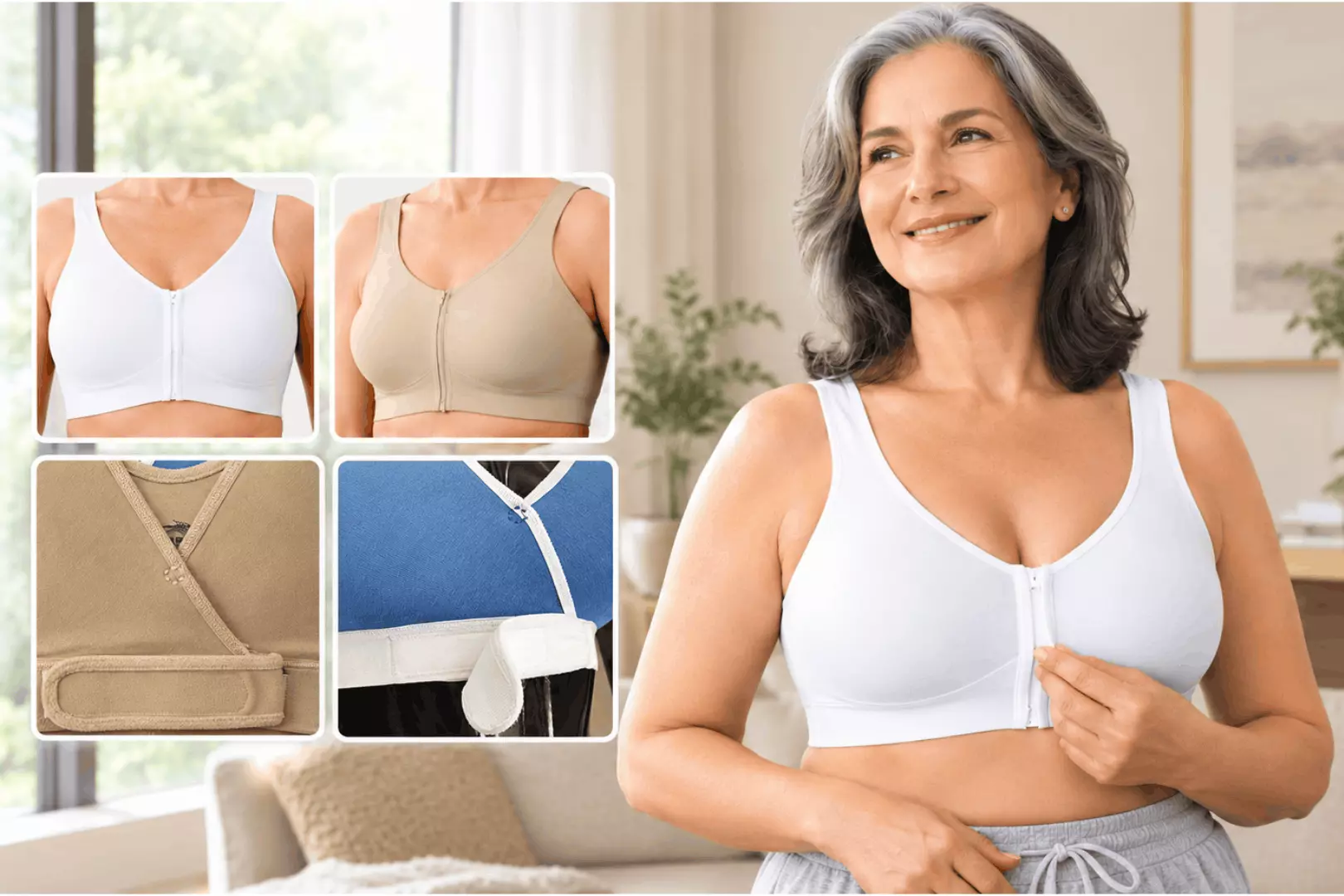
A Velcro® front closure changes the task. Instead of trying to align several tiny hooks behind your body, you fasten the bra from the front. That can reduce the amount of reaching, twisting, and fine finger movement required.
A Velcro® fastening removes the need to align small hooks, but its design still matters. Consider how easily you can grasp the tab, secure the closure, and release it when taking the bra off.
Look for a fastening tab that feels manageable in your fingers. You should be able to hold and move it without struggling to pinch a tiny edge.
Check how much effort it takes to separate the Velcro®. The fastening should hold securely during wear while remaining manageable for you to open, especially if gripping or pulling is difficult.
You should be able to bring the front panels together and secure them without awkward twisting or repeated adjustments. Check that you can position the closure comfortably while wearing the bra.
Once fastened, the rough hook surface should be covered by the matching panel. Exposed edges can rub against your skin, so check that the closure lies flat and feels comfortable when you move.
The closure should remain secure as you sit, reach, and move through your day. If the front pulls apart, gaps, or feels overly tight, check the size and fit rather than pulling the fastening tighter.
Alongside an accessible fastening, look for comfortable straps, soft fabric, smooth seams, and a supportive underbust band. These features help make the bra comfortable to wear after you have fastened it.
Some Velcro® front closure bras include a D-ring to guide the adjustable underbust strap. The strap passes through the ring and folds back to fasten, allowing the band to be tightened or loosened.
An optional snap provides an additional fastening point between the front panels. Whether it needs to be fastened depends on the bra’s design and instructions.
Check whether you can comfortably grasp the strap, adjust it through the ring, and operate the snap.
A Velcro® front closure bra may be useful for women with arthritis because it can reduce the need to pinch small hooks or reach behind the back.
If your fingers feel stiff or sore, traditional hooks can be difficult to manage. Fastening the bra in front, where you can see and reach the closure, may help make putting on a bra with arthritis easier.
However, individual needs vary. Some women may prefer Velcro®, while others find a zipper or another adaptive closure easier to use. The best choice depends on your hand strength, shoulder mobility, and what feels comfortable to manage.
You can explore this fastening style in Fresh Comfort’s Easy-Open Velcro Front Closure Bras, available in multiple colors and sizes.”
A bra should be comfortable to wear and manageable to put on. Choosing a fastening that works for your hands and mobility can make everyday dressing easier.
RECENT BLOG POSTS
How to Put On a Bra Comfortably When You Have Arthritis?
Bra Hard to Put On? Front Closure Bras Can Help
Why a Well-Fitting, Velcro® Front-Closure Bra Matters More Than You Think
Get our emails for info on new trends and more.


