
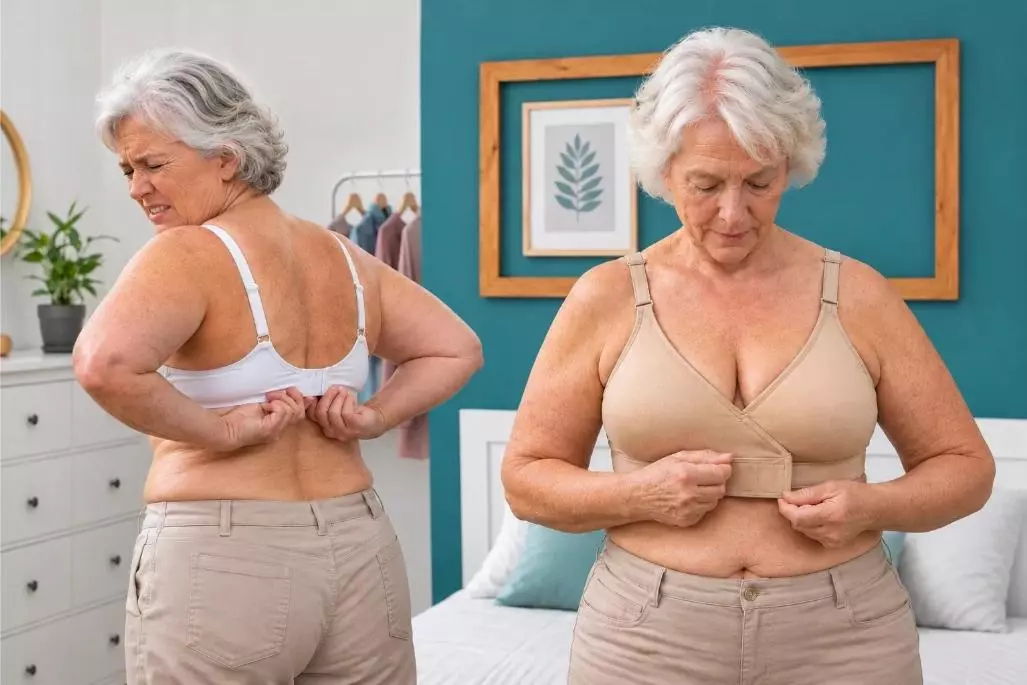

Putting on a bra should not be one of the hardest parts of getting dressed. But if you have arthritis, it can become exactly that. Your fingers may feel stiff when you try to fasten small hooks. Reaching behind your back may hurt. Pulling a bra band into place can put pressure on sore hands, wrists, shoulders, or arms.
Some days, you may need help with something you used to do without thinking. We understand that frustration at Fresh Comfort. We design adaptive bras around these everyday dressing challenges, because getting dressed should feel manageable, comfortable, and as independent as possible.
Arthritis can make movements that require gripping, twisting, or reaching more difficult. For example, hand arthritis can cause pain, stiffness, weakness, and reduced movement. The Arthritis Foundation's guide to hand osteoarthritis serves as the foundational resource for understanding symptoms, treatment options, and day-to-day management strategies.
A traditional bra asks a lot of your body all at once. You reach behind your back, hunt for tiny hooks you can’t see, pinch them shut, and then tug the band into place and fix the straps. Any one of those is easy enough.
Do them all with aching joints, though, and getting dressed becomes a daily fight. For a lot of people, wearing the bra was never the issue. Getting it on is. That is where changing the type of bra you wear can help.
When a particular movement causes pain or frustration, it makes sense to look for a way to avoid that movement.
For many women with arthritis, the difficult part is reaching behind the back and fastening traditional hooks.
A front-closure bra changes that. Instead of reaching backward, you can bring the closure in front of you where your hands have more control.
Occupational therapy guidance for people with rheumatoid arthritis also recommends adapting clothing fasteners when necessary. One NHS guide suggests using easier fasteners such as Velcro and notes that front-fastening bras may be easier to manage.
This is an important distinction. You do not necessarily need to learn how to fasten a traditional bra differently. You may simply need a bra that asks less of your hands and shoulders.
.webp)
There is no single feature that works for everyone. Start by identifying which part of getting dressed causes you the most difficulty.
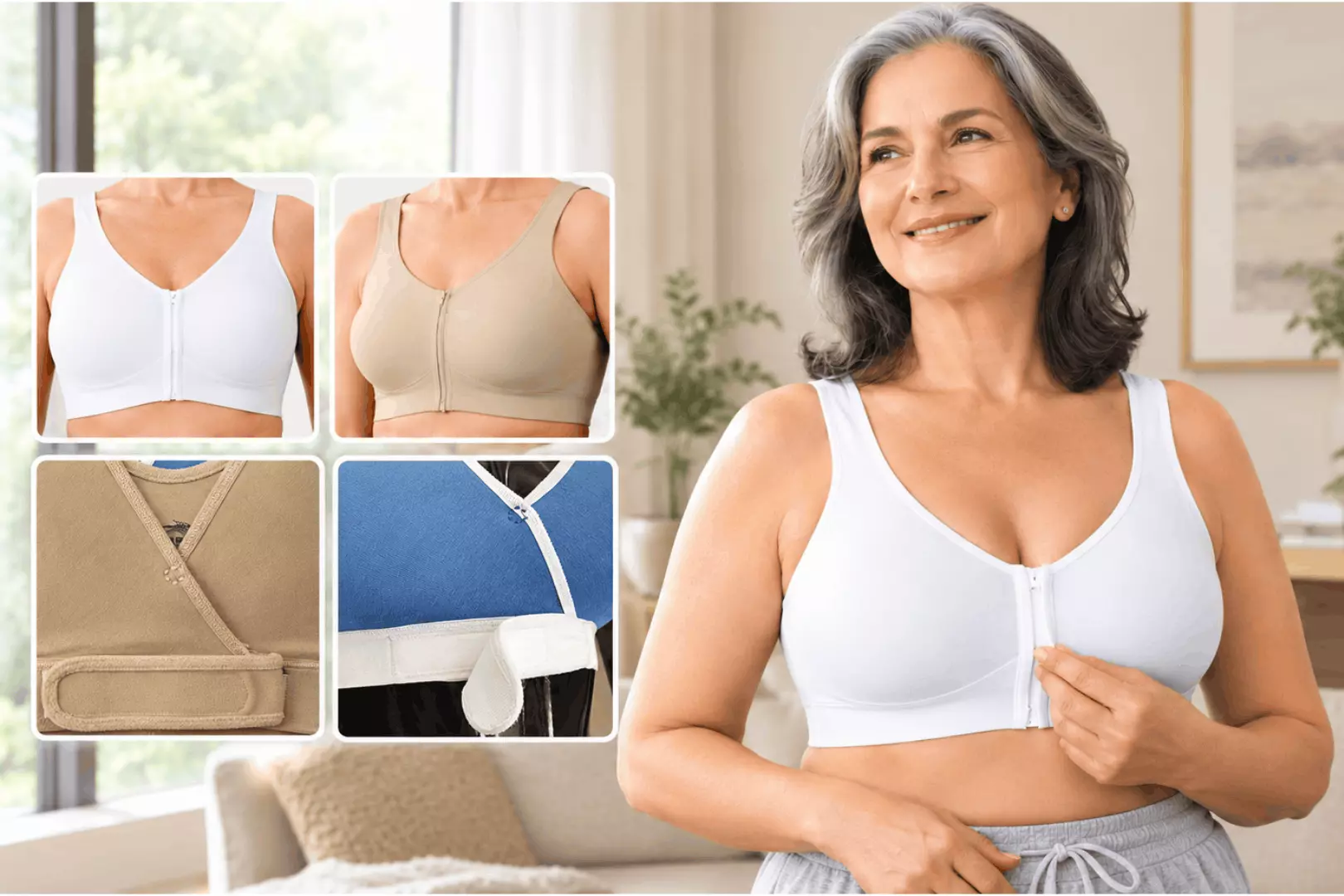
If reaching behind your back is uncomfortable, a front-closure bra eliminates that step. You can put the bra on and secure it where you can see and reach the fastening.
Some front-closure bras still use hooks, so don't assume that front means easy. Small hooks can be frustrating when your fingers are stiff or painful.
A larger, easier-to-manage closure may reduce the need for precise finger movements. Velcro closures are one option. Zippers can be another, depending on your hand function and personal preference.
Straps should be easy to adjust without requiring complicated movements. You should be able to make small changes to your fit without putting unnecessary strain on your joints.
Check your strap adjustments periodically, especially after washing, to make sure they still provide a comfortable fit.
Ease of dressing is important, but so is how the bra feels once it's on. Soft materials, smooth seams, and a comfortable band can help reduce irritation from pressure points or rough edges.
A bra that works well for someone else may not be the right choice for you. Think about how easily you can reach, lift your arms, and manage closures.
If certain movements cause discomfort, prioritize a design that requires less reaching, twisting, or precise finger movement.
Choose a bra based on the movements you find difficult, not just the type of closure it has.
A velcro front closure can make fastening more accessible than a conventional back-hook design. Instead of reaching behind your back and trying to connect several small hooks without seeing them, you can position the bra from the front and secure the closure where it is easier to reach and manage. For some women, that simple change can make getting dressed feel much less complicated.
This is one of the reasons we use altern
ative closures in our adaptive bras. Traditional hooks require you to locate small pieces, hold them in place, and use your fingers to connect them. That can be particularly frustrating when your hands are stiff.
If your skin is sensitive and you want extra support, a zipper bra may suit you better. The seamless technology gives a smooth finish around the chest, and the wide straps add comfort. At the end of the day, you just pull it down, and it slips off easily.
There is no need to force yourself into one particular closure. The right choice depends on your hands, your range of motion, the level of support you want, and what feels easiest for you to operate.
Before buying another bra, think about the one you currently wear. Put it on slowly and pay attention to which part of the process feels difficult.
Identify what makes your current bra difficult to wear, then choose features that address those specific problems.
The bra itself is only part of the solution. A few small changes to your daily routine may also make dressing more manageable.
Rushing can make difficult movements even more frustrating, especially when your joints feel stiff.
Some people find dressing while seated less tiring and easier to manage.
If reaching behind your back con
sistently causes discomfort, consider a different fastening style rather than repeatedly forcing the movement.
An occupational therapist can suggest dressing techniques or adaptive tools that suit your mobility and comfort needs.
Finding the right bra and making small adjustments to your routine can make everyday dressing feel less challenging. What matters most is choosing an approach that works for your body, your comfort, and your independence.
RECENT BLOG POSTS
Bra Hard to Put On? Front Closure Bras Can Help
Why a Well-Fitting, Velcro® Front-Closure Bra Matters More Than You Think
Get our emails for info on new trends and more.


